
Electric vehicles, grid-scale battery storage, and advanced electronics rely on lithium-ion batteries that generate heat during operation. Engineers must control that heat to maintain safety, efficiency, and battery lifespan. Battery thermal management systems (BTMS) regulate battery temperature so cells operate within an optimal range.
Without proper thermal management, batteries can degrade quickly, lose capacity, or enter thermal runaway. Businesses that design, store, or transport battery systems must understand the different thermal management strategies available. These systems protect both the batteries and the facilities that handle them.
The following sections explain the main types of battery thermal management systems and how each one works.
Why Battery Thermal Management Matters
Lithium-ion batteries perform best within a narrow temperature range, typically between 20°C and 40°C (68°F to 104°F). Temperatures outside that range reduce efficiency and increase safety risks.
High temperatures accelerate chemical reactions inside the battery. Those reactions degrade internal components and shorten battery life. Excess heat can also trigger thermal runaway, which can lead to fires or explosions.
Low temperatures create different challenges. Cold batteries deliver less power and charge more slowly. Extremely cold conditions can even cause permanent damage during charging.
The Key Functions of a Battery Thermal Management System
A BTMS performs several important functions within electric vehicles and stationary battery systems.
These systems must:
- Maintain consistent battery temperatures
- Prevent overheating during charging and discharging
- Reduce temperature differences between individual cells
- Improve battery efficiency and lifespan
- Protect batteries during extreme environmental conditions
Engineers design BTMS solutions to achieve these goals while minimizing energy consumption and system complexity.
Air-Based Battery Thermal Management Systems
Air cooling represents one of the simplest thermal management methods. These systems move air across battery cells to remove heat.
Fans or blowers circulate ambient air through channels inside the battery pack. The moving air absorbs heat from the cells and carries it away from the battery enclosure.
Manufacturers often choose air cooling because it offers several advantages:
- Lower cost
- Simple design
- Minimal maintenance
- Reduced system weight
However, air cooling provides limited heat removal capacity. High-performance electric vehicles and large battery packs often require more advanced cooling methods.
Passive Air Cooling Systems
Passive air cooling relies on natural airflow and heat dissipation without mechanical fans.
Engineers design battery enclosures with ventilation openings and heat-dissipating materials. As batteries generate heat, warm air rises and escapes while cooler air enters the system.
This approach works best in smaller electronics or low-power battery applications.
Passive systems offer benefits such as:
- No moving parts
- Lower energy consumption
- Simple installation
Despite those benefits, passive cooling cannot control temperature precisely. Most modern electric vehicles require active cooling instead.
Active Air Cooling Systems
Active air cooling uses fans or blowers to move air through battery modules. The forced airflow improves heat removal compared to passive methods.
Sensors monitor battery temperatures and adjust airflow accordingly. The system increases fan speed when temperatures rise and reduces airflow when batteries operate within the ideal range.
Active air cooling systems often appear in hybrid vehicles and smaller electric vehicles. Engineers favor them when they need a balance between performance and cost.
However, air still transfers heat less efficiently than liquids. Larger battery packs often require more powerful cooling technologies.
Liquid Cooling Battery Thermal Management Systems
Liquid cooling provides one of the most effective ways to regulate battery temperature. These systems circulate coolant through channels or plates placed near battery cells.
The coolant absorbs heat from the batteries and transfers it to a radiator or heat exchanger. Pumps keep the fluid moving through the cooling circuit.
Many electric vehicle manufacturers prefer liquid cooling because it delivers several benefits:
- High heat transfer efficiency
- Precise temperature control
- Uniform cooling across battery cells
- Compatibility with large battery packs
Liquid cooling systems require additional components such as pumps, pipes, and heat exchangers. That complexity increases cost but significantly improves performance.
Direct Liquid Cooling Systems
Direct liquid cooling systems place coolant channels directly alongside battery cells. The coolant absorbs heat almost immediately as it forms.
Engineers often integrate cooling plates or tubes between battery modules. These components create close thermal contact with the cells.
Direct cooling provides very efficient heat removal and minimizes temperature differences within the battery pack. Many high-performance electric vehicles rely on this design.
The system must prevent coolant leaks and electrical hazards, so manufacturers use sealed components and specialized fluids.
Indirect Liquid Cooling Systems
Indirect liquid cooling separates the coolant from the battery cells with a thermal interface material or cooling plate.
Heat travels from the battery cell through the plate and into the coolant channel. This design creates an additional layer of safety by preventing direct fluid contact with the battery.
Indirect systems simplify maintenance and reduce leak risks. Many commercial electric vehicles and energy storage systems use this approach.
Although heat transfer occurs slightly slower than direct cooling, indirect systems still outperform air-based solutions.
Phase Change Material (PCM) Thermal Management
Phase change materials provide a unique approach to battery thermal management. These materials absorb heat by changing their physical state.
When temperatures rise, the material melts and stores heat energy during the phase transition. The process stabilizes battery temperatures without requiring pumps or fans.
PCM systems offer several advantages:
- Passive operation
- High energy absorption capacity
- Reduced system complexity
- No moving parts
Engineers often combine PCM solutions with other cooling methods. The PCM stabilizes temperatures during peak loads while air or liquid cooling removes accumulated heat.
Refrigerant-Based Battery Cooling Systems
Some advanced thermal management systems use refrigerant loops similar to air conditioning systems.
The refrigerant flows through evaporators and absorbs heat from the battery pack. The system then compresses and condenses the refrigerant to release the heat outside the vehicle or enclosure.
Refrigerant cooling systems deliver strong thermal control in extreme conditions. Electric vehicles that operate in hot climates often rely on this technology.
These systems can integrate with vehicle HVAC components, allowing the cooling system to serve multiple purposes.
Hybrid Thermal Management Systems
Modern battery packs often use hybrid thermal management systems that combine multiple cooling methods.
For example, a system may combine:
- Liquid cooling for primary heat removal
- Air circulation for airflow management
- Phase change materials for temperature stabilization
Hybrid systems allow engineers to optimize performance for different operating conditions. Batteries remain safe and efficient during both high loads and long charging sessions.
Large energy storage installations frequently use hybrid designs to handle variable power demands.
Thermal Management for Battery Storage Facilities
Battery thermal management also plays a critical role in storage and transportation environments. Large numbers of lithium-ion batteries can generate significant heat during storage, charging, or testing.
Facilities that manage EV batteries must design storage areas that minimize thermal risks. Proper ventilation, temperature monitoring, and containment systems reduce the likelihood of thermal events.
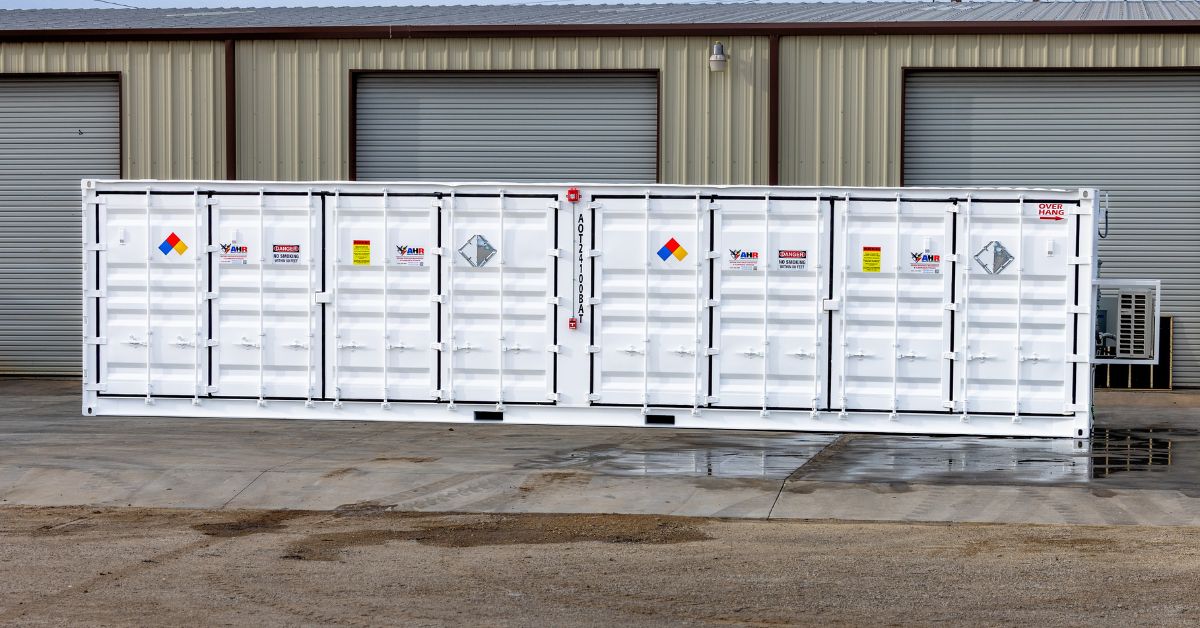
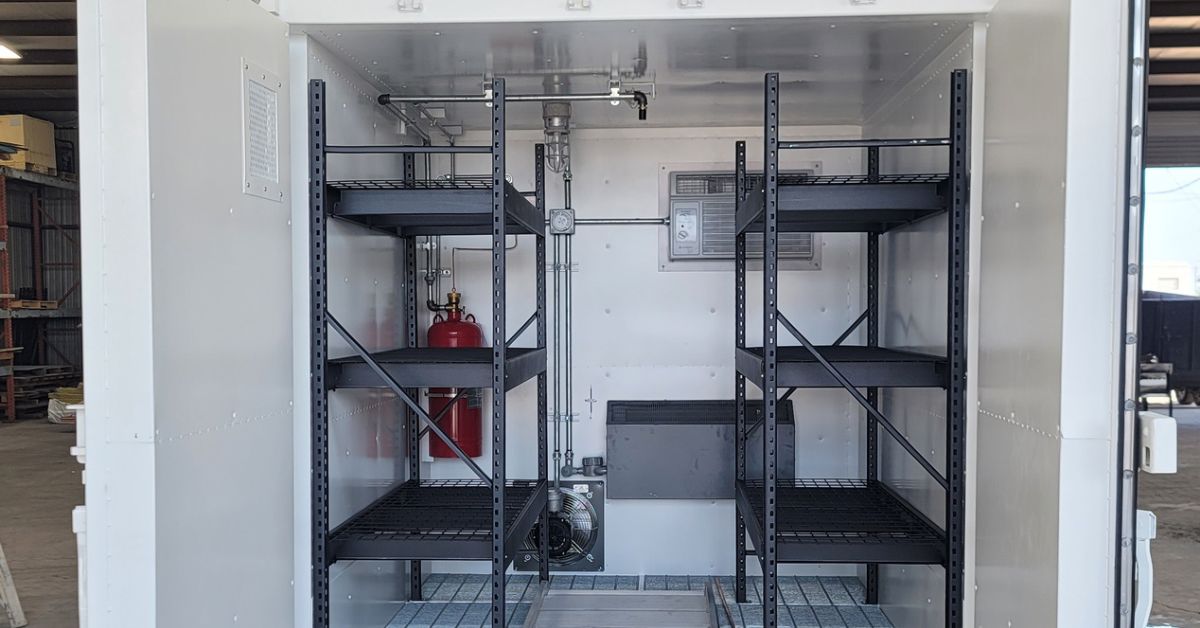
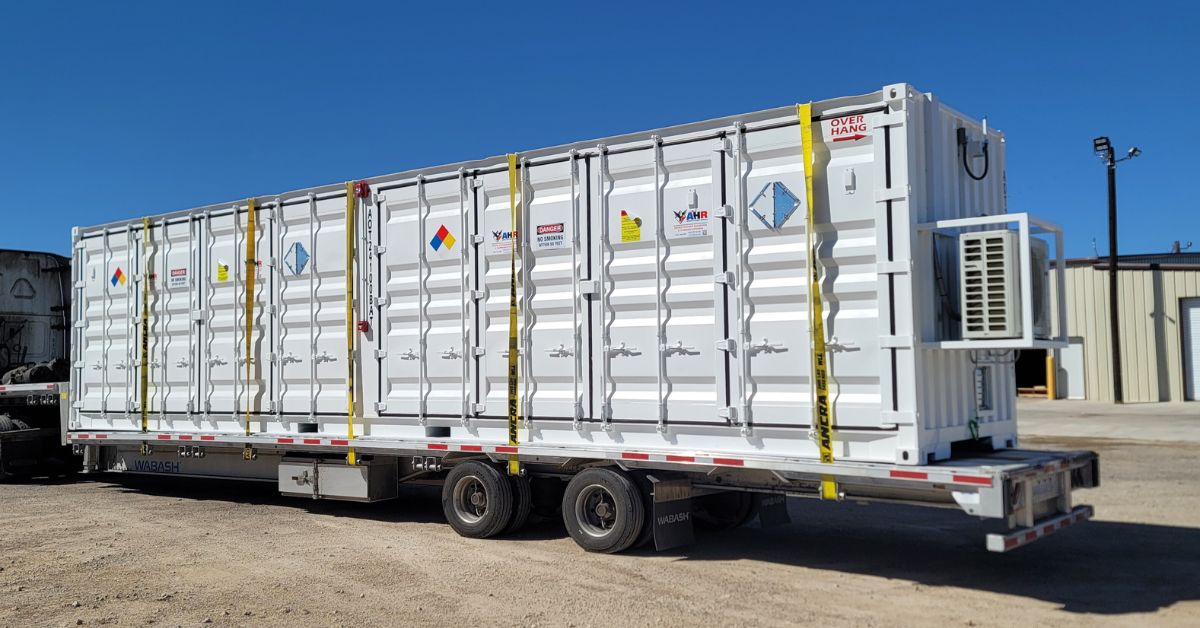
Industrial operations that handle large battery inventories often rely on specialized EV battery storage containers to control temperature and isolate hazards. These containers provide controlled environments that help prevent overheating and improve safety during storage or transport.
Businesses that work with lithium-ion batteries must consider both active cooling systems and secure storage infrastructure.
Final Thoughts on Battery Thermal Management Systems
Battery thermal management systems protect lithium-ion batteries from overheating, temperature imbalance, and performance degradation. Engineers have developed multiple approaches to control battery temperature, including air cooling, liquid cooling, phase change materials, and hybrid solutions.
Each system offers different advantages depending on battery size, performance requirements, and operating conditions. Proper thermal control improves safety, extends battery lifespan, and supports reliable energy storage.
Organizations that manufacture, transport, or store batteries must also consider the broader thermal environment. Effective cooling systems and proper storage infrastructure help reduce fire risk and maintain battery integrity.