
Lithium-ion batteries power everything from smartphones and power tools to electric vehicles and industrial machinery. These energy-dense power sources offer incredible efficiency, but they also introduce significant volatility into your facility. When these batteries fail, they do not fail quietly. They explode, burn with intense heat, and release toxic gases. Business owners and facility managers must recognize that standard shelving or general-purpose warehouses often lack the necessary engineering to contain these hazards.
Hazmat storage buildings provide the specific engineering controls required to handle the instability of lithium-ion technology. These specialized units do more than just hold inventory; they actively mitigate risks through fire-rated construction, climate control, and advanced suppression systems. Investing in proper storage infrastructure protects your employees, preserves your property, and ensures you remain on the right side of federal regulations. Understanding specifically how these storage solutions support safety protocols will help you make informed decisions for your facility.
Mitigating Thermal Runaway Risks
Thermal runaway represents the primary threat associated with lithium-ion batteries. This chemical process occurs when a battery cell enters an uncontrollable self-heating state. The heat generates more heat, causing the reaction to accelerate until the cell ruptures or ignites. Hazmat storage buildings combat this by utilizing non-combustible, fire-rated construction.
If a single cell enters thermal runaway, the surrounding structure must withstand the intense heat without collapsing or allowing the fire to spread to adjacent buildings. High-performance hazmat lockers feature heavy-gauge steel construction and mineral wool insulation that contain the heat. This containment buys critical time for emergency responders and prevents a localized equipment failure from becoming a catastrophic facility-wide fire.
Maintaining Optimal Temperature Control
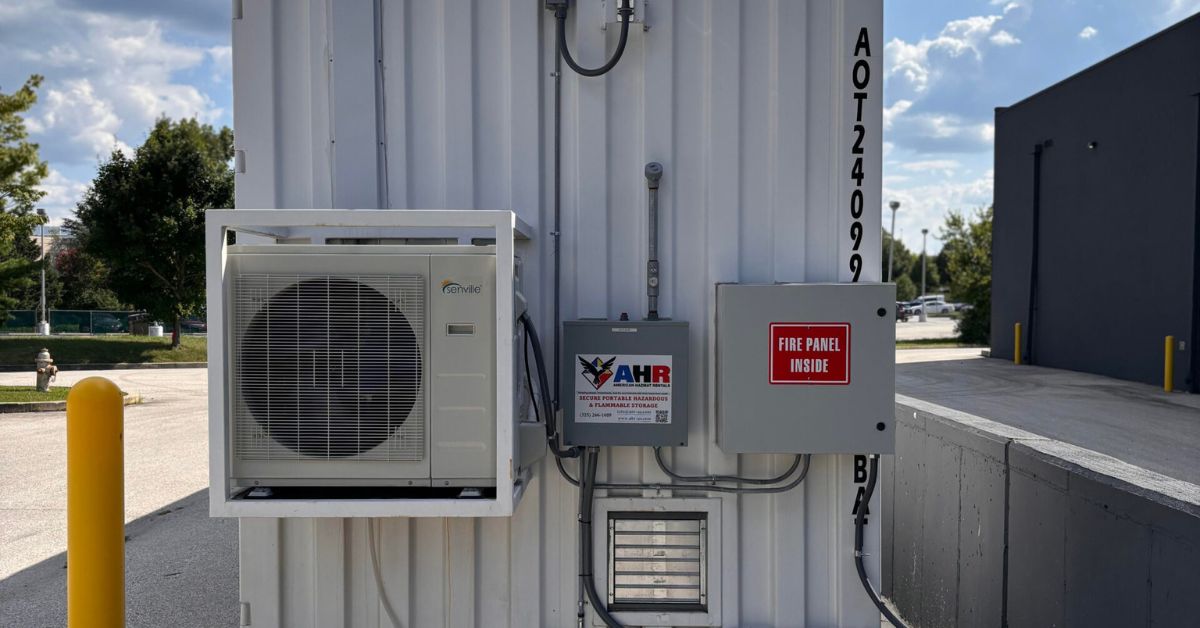
Lithium batteries are highly sensitive to temperature fluctuations. Extreme heat degrades the battery chemistry and significantly lowers the threshold for thermal runaway. Conversely, charging batteries in freezing temperatures can cause lithium plating, which creates internal short circuits. Hazmat storage solutions frequently integrate climate control systems to maintain a stable environment.
HVAC systems within these storage units ensure that the internal temperature remains within the manufacturer’s specified safety range. By keeping the batteries cool and dry, you effectively remove one of the most common triggers for battery failure. This proactive approach preserves the lifespan of your inventory while drastically reducing the likelihood of a spontaneous combustion event.
Containing Explosive Deflagration
When a lithium battery fails, it often releases a flammable vapor cloud before it ignites. If this cloud accumulates and finds an ignition source, it causes a deflagration—a subsonic combustion that propagates through heat transfer. This event creates immense pressure that can blow apart standard structures.
Engineers design hazmat storage units with damage-limiting construction. This often includes explosion relief panels or blast-resistant designs. These features direct the force of a blast upward or away from personnel and other structures. By channeling the explosive force predictably, the storage unit minimizes structural damage and protects workers in the vicinity from flying debris and shockwaves.
Ensuring Regulatory Compliance
Agencies like OSHA and the NFPA enforce strict codes regarding the storage of energy storage systems (ESS). Navigating these regulations requires deep knowledge of fire codes, including NFPA 855. Specialized hazmat storage manufacturers build their units specifically to meet or exceed these rigorous standards.
Utilizing a certified storage solution demonstrates a commitment to safety and compliance. It simplifies the inspection process because the unit already carries the necessary approvals and engineering stamps. You avoid the headache of retrofitting an existing room to meet code. Instead, you deploy a compliant solution that satisfies insurance requirements and local fire marshals immediately upon installation.
Implementing Fire Suppression Systems
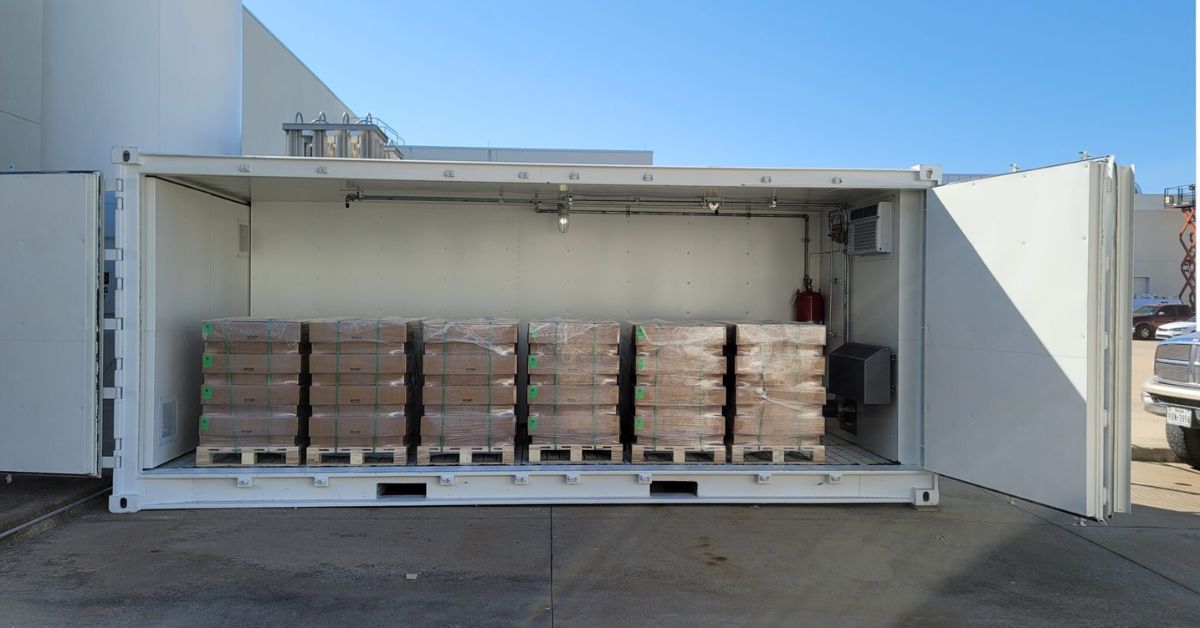
Water often proves ineffective against lithium battery fires, as these fires burn at incredibly high temperatures and can react with water. Furthermore, the sheer density of battery packs makes it difficult for water to penetrate to the source of the heat. Hazmat storage lockers address this by offering integrated fire suppression systems tailored to the specific hazard.
These systems may utilize clean agents, dry chemicals, or high-density water sprinklers designed to cool the surrounding cells and prevent propagation. The suppression system activates automatically upon detecting heat or smoke, attacking the fire instantly even if no personnel are present. This rapid response capability is vital for limiting the severity of a battery fire event.
Preventing Chain Reaction Propagation
Propagation occurs when the heat from one failing battery ignites the batteries next to it, creating a domino effect. Proper hazmat storage supports separation strategies to stop this chain reaction. The design often includes racking systems that allow for adequate spacing between pallets or individual battery packs.
Additionally, you can configure these units with internal partition walls. These fire-rated barriers segment the inventory. If a fire starts in one compartment, the walls stop it from reaching the rest of the stock. This compartmentalization preserves the majority of your assets and makes the fire much easier for emergency crews to manage.
Capturing Hazardous Electrolyte Spills
While fire is the most dramatic risk, leaking electrolytes also pose a serious health hazard. The electrolyte in lithium batteries often contains corrosive salts and organic solvents. If a battery case cracks due to impact or swelling, this liquid can leak onto the floor, creating a slip hazard and a chemical exposure risk.
Hazmat storage buildings come equipped with integrated secondary containment sumps. These leak-proof basins sit beneath the floor grating to catch any drips or spills. The sump prevents the hazardous chemicals from entering the environment or contaminating the facility floor. This containment feature simplifies cleanup and ensures you comply with EPA regulations regarding hazardous substance control.
Venting Dangerous Off-Gassing
As batteries degrade or fail, they release hazardous gases including hydrogen, carbon monoxide, and hydrogen fluoride. In a confined space, hydrogen can build up to explosive levels, while hydrogen fluoride poses an immediate respiratory threat to anyone who enters the area.
Mechanical ventilation systems are a standard feature in high-quality hazmat storage. These fans continuously cycle the air, preventing the accumulation of flammable or toxic vapors. In the event of a gas release, the ventilation system exhausts the fumes to a safe location outdoors, maintaining a safe atmosphere for employees who need to access the unit.
Securing Batteries From External Damage
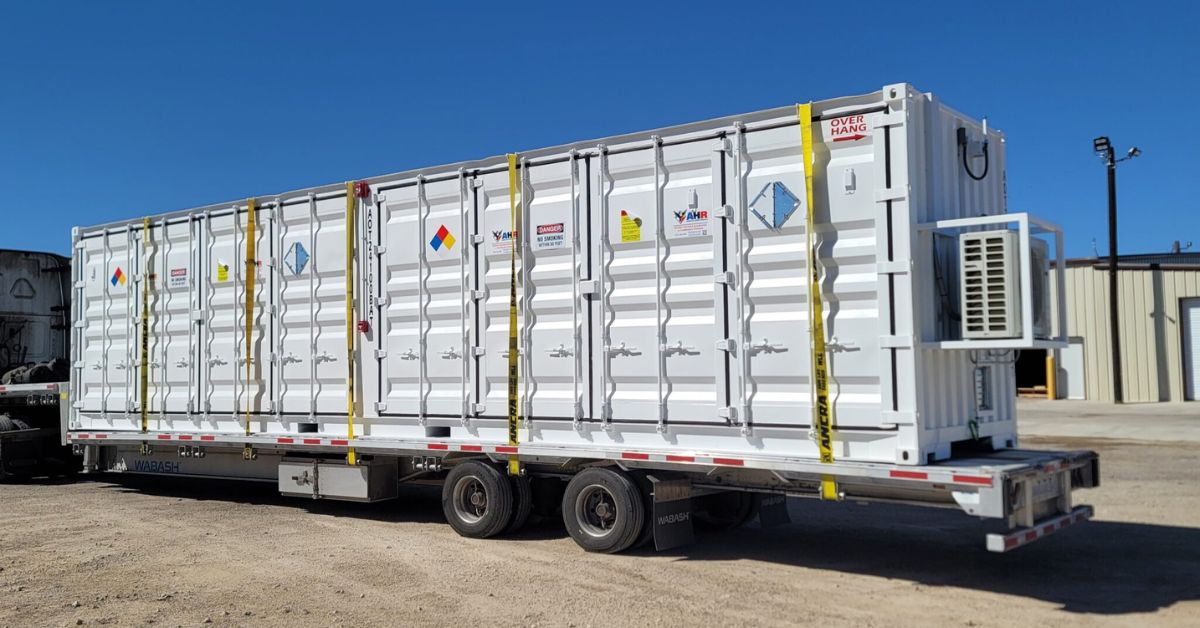
Physical damage punctures the separator within a battery cell, causing an internal short circuit that leads to fire. A dedicated lithium battery storage container offers robust protection against external impacts. Unlike wire cages or open shelving, the heavy-duty steel exterior of a hazmat building deflects impacts from forklifts or other machinery.
Furthermore, these units protect the batteries from the elements if located outdoors. Rain and moisture can corrode battery terminals and damage the battery management systems (BMS). By providing a weather-tight, secure enclosure, hazmat storage prevents environmental factors from compromising the integrity of your energy storage systems.
Prioritize Safety Today
Storing lithium-ion batteries requires more than just available floor space; it demands a strategic approach to risk management. The potential consequences of improper storage range from regulatory fines to devastating fires that could close your business permanently. Hazmat storage buildings provide the necessary engineering controls to handle thermal runaway, contain explosions, and manage toxic emissions.
Do not wait for an incident to expose gaps in your safety protocols. Evaluate your current battery storage methods against the risks outlined above. Secure your facility and protect your workforce by implementing a purpose-built hazmat storage solution. Contact a qualified storage expert today to design a compliant, safe environment for your lithium battery inventory.